Why this framework is needed
Modern organizations can adopt powerful technologies faster than ever. Cloud platforms, open-source ecosystems, automation tools, and AI-assisted engineering have reduced many barriers to implementation.
But faster adoption does not automatically produce better systems.
A choice may be easy to start and still create recurring security work, specialist dependency, fragile operations, hidden maintenance cost, or a future migration that no one has the context to manage. Traditional evaluations often describe features and immediate fit while leaving these long-term burdens implicit.
The Architecture Quality Methodology makes them visible. It evaluates technology within the organization that must live with the decision—not as an isolated product score.
The economics of technology in the AI era
AI can reduce portions of the work required to adopt, build, document, test, and troubleshoot technology. The book distinguishes that reduction in effort from the underlying quality of the technology itself. A tool can become easier to use without becoming more secure, maintainable, resilient, or appropriate for a particular enterprise.
Six dimensions of architectural quality
The Adaptive Architecture Framework evaluates evidence across:
- Secure by Default
- Human and Agent Collaboration
- Maintainability
- Operational Excellence
- Strategic Resilience
- Adversarial Exposure
Together, these dimensions provide a structured way to examine how a technology affects people, systems, risk, operations, and long-term organizational capability.
Evidence-based evaluation
The methodology begins with a business objective and defined scope, then uses an interdisciplinary Evidence Register to support architectural ratings. Rating and confidence are recorded separately, so leaders can see the difference between a weak option and a conclusion based on limited evidence.
Technology Profiles and living standards
A completed evaluation becomes a reusable Technology Profile: a record of the decision, evidence, tradeoffs, assumptions, ratings, confidence, and conditions for future review. These profiles allow technology standards to evolve as evidence changes and preserve architectural understanding across teams and years.
Enterprise technology intelligence and shared cognition
The book extends individual evaluations into an organizational capability. When decisions and their evidence are preserved, each project can add to the organization's ability to make the next decision. Architecture becomes a form of shared cognition rather than a sequence of disconnected approvals.
What makes the approach different
The framework does not claim that one technology is universally best. Architectural quality depends on the organization's goals, constraints, risk tolerance, operating environment, and evidence.
It also does not treat architecture as documentation produced after a preference has already been chosen. The evaluation is designed to make the reasoning traceable before approval and revisable when conditions change.
The result is a more useful question. Instead of asking only, “Was this the right decision?” leaders can ask:
Is this still the right decision based on today's evidence?
Who the book is for
This book is for:
- Enterprise and solution architects evaluating technology choices
- CTOs, CIOs, and engineering leaders responsible for long-term technical direction
- Architecture Review Boards seeking more consistent, evidence-based decisions
- Platform and security leaders balancing adoption speed with durable quality
- Organizations integrating AI into software delivery and operations
- Consultants and senior engineers who must explain not only what they recommend, but why
From enterprise architecture to practical business systems
Boyer Impact Systems brings the same principles to growing companies without importing unnecessary enterprise bureaucracy.
The work begins with a business problem, follows the evidence, evaluates the burden a change will remove or create, builds the right level of solution, and measures what changed. Whether the decision involves AI automation, business process automation, system integration, or public information architecture, the objective is the same: create a system that people can understand, operate, and improve.
About the author
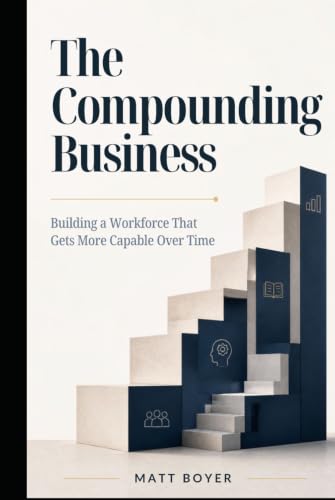
Matt Boyer is an engineer, systems architect, author, and founder of Boyer Impact Systems. With more than 20 years of engineering experience, he works at the intersection of architecture, software, automation, AI, security, operations, and organizational learning.
His perspective is practical: a system should not be judged only by whether it can be built. It should be judged by whether it reduces burden, preserves understanding, supports responsible operation, and leaves the organization better able to make its next decision.